Architects use LOD 100-300 for design and coordination. How does BIM support facilities management?
BIM provides a complete digital model of a building’s assets, systems, and spaces. Early detection reduces costly on-site changes and ensures that operational systems are installed correctly from day one.
8.
The question isn't whether to adopt BIM, but how to do so effectively for your specific projects and organizational needs.
Frequently Asked Questions
BIM (Building Information Modeling) is a data-rich 3D representation of a physical asset. This model acts as a shared source of truth for architects, engineers, contractors, and facility teams, helping everyone work from the same data.
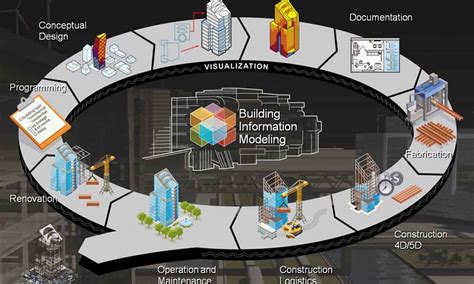
Here’s how it works across the building lifecycle:
1.
They're discipline-specific:
Architecture: Revit, ArchiCAD, Vectorworks
Structural: Revit Structure, Tekla Structures
MEP: Revit MEP, AutoCAD MEP
Civil/Infrastructure: Civil 3D, OpenRoads, 12D
Owning authoring software gives firms control over their models and design data—critical intellectual property.
Unlike simple 3D modeling tools like SketchUp or Rhino, BIM contains embedded information essential for the entire project lifecycle—from design through construction to facility management. Owners receive LOD 500 as-built models with facility management data in COBie format for operations.
The Netherlands and Australia have similar OpenBIM-based mandates for public projects.
Table of Contents
Authors
Jane Sison
Need CAD Drawings or 3D Models?
Get professional CAD drawings, 3D models, and photorealistic renders delivered fast.
When multiple disciplines—structural, architectural, mechanical, electrical, plumbing—work on the same project, conflicts are inevitable. Since data is shared this way, the CAD software must be capable of exporting to a common file format, such as IFC (Industry Foundation Class) or COBie (Construction Operations Building Information Exchange).
Level 3 BIM: teams work with a shared 3D model
BIM level 3 is even more collaborative.
It bridges the gap between design intent and operational performance, allowing organizations to bring BIM data into everyday facility management.
Energy Management Software to Scale Your Sustainability Journey
Scale your decarbonization journey with portfolio-level energy optimization with a cloud-based supervisory platform.
By integrating seamlessly with existing BIM models, Facilio creates a unified environment where:
Asset data and maintenance workflows are connected in real time.
Building performance can be monitored, analyzed, and optimized continuously.
Insights from operations feed back into better design, sustainability, and planning decisions.
Unlike traditional CMMS systems that operate in isolation, Facilio turns BIM into a living source of truth — one that evolves as your buildings do.
What is BIM (Building Information Modeling)
BIM model of Randselva Bridge, the world's longest bridge built with BIM models only - no drawings.
What Is BIM?
BIM is an acronym for Building Information Modeling or Building Information Management.
Where do conduits penetrate slabs? While BIM offers clear advantages for coordination and clash detection, the 2D-to-BIM transition requires significant investment in software, training, and process change. Each component carries data about its size, material, and performance, creating an intelligent model that supports design, analysis, and maintenance decisions.
2.
Now, BIM (Building Information Modeling) is the standard— but it is much more than just a 3D model.
BIM objects
BIM objects, the components that make up a BIM model, are intelligent, have geometry, and store data. Integrating Building Information Modeling (BIM) with a Connected CAFM platform like Facilio turns design intelligence into ongoing operational value.
While BIM captures how a building is designed and constructed, Facilio extends that intelligence into real-time operations, bridging the gap between project completion and continuous performance.
Here’s how the two work together:
Real-time asset visibility: Facilio connects BIM data with live asset performance, helping teams visualize and act on equipment conditions instantly.
Automated maintenance: Model insights trigger work orders and predictive maintenance, ensuring issues are addressed before failures occur.
Sustainability optimization: Facilio uses BIM’s building data to enhance energy efficiency and track sustainability KPIs.
Smooth handover: Design, asset, and maintenance data flow seamlessly from construction teams to operations.
Together, BIM and Facilio move facility management from static models to living, adaptive ecosystems, where data continuously informs smarter, more sustainable decisions.
Who benefits most from BIM and Connected CAFM integration?
Building Information Modeling (BIM) delivers real value when extended into operations through a Connected FM platform like Facilio.
It ensures every stakeholder works from the latest data, improving collaboration, version control, and project transparency.